
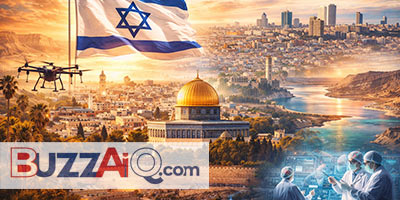
Israel: A Comprehensive Look at Its History, Culture, and Modern Influence
Table of Contents (TOC)
- Introduction
- The Ancient History of Israel
- Modern Israel: Formation and Growth
- Israel and Its Cultural Diversity
- Israel’s Geography: From the Dead Sea to the Mediterranean
- Israel's Political Landscape and Challenges
- Key Contributions of Israel to Global Innovation
- Israel's Role in Religion and Spirituality
- Israel and Palestine: Understanding the Conflict
- The Future of Israel: Challenges and Opportunities
- Key Takeaways
- FAQs
- Conclusion
Introduction
Israel is a country whose significance goes far beyond its small size and geographical location. Located in the heart of the Middle East, it holds a unique place in both ancient and modern history. From its roots in biblical times to its formation in the 20th century and its ongoing role in global politics, Israel is a country defined by its rich history, diverse culture, religious importance, and complex political landscape. This blog will explore the various facets of Israel, providing a comprehensive understanding of its history, culture, political climate, and its modern influence in the world today.
2. The Ancient History of Israel
The history of Israel traces back to biblical times, making it one of the oldest civilizations in the world. Israel’s origins are deeply rooted in the stories of the Hebrew Bible, with figures such as Abraham, Moses, King David, and King Solomon playing pivotal roles. Historically, Israel was part of the ancient kingdom of Israel, which flourished for centuries before its eventual split into the Kingdom of Israel and the Kingdom of Judah.
Key moments in Israel’s ancient history:
- The establishment of the Kingdom of Israel under King Saul and its peak under King David and Solomon.
- The conquest by the Babylonians and the destruction of the First Temple.
- The Jewish diaspora following Roman conquests.
Israel’s ancient history is also marked by the prominence of Jerusalem, a city that holds profound religious significance for Judaism, Christianity, and Islam. (Encyclopedia Britannica)
3. Modern Israel: Formation and Growth
Modern Israel was founded in 1948, following the end of the British mandate in Palestine and the subsequent approval of a United Nations partition plan. The founding of Israel marked a new chapter in Jewish history, fulfilling the Zionist movement’s vision of establishing a Jewish homeland. However, this event also led to conflicts with the Arab nations surrounding it, resulting in the Israeli-Arab wars, the most notable being the Six-Day War in 1967.
Key milestones in the formation of Israel:
- 1948: Israel declared independence.
- 1967: The Six-Day War expanded Israel’s territory.
- 1979: The Camp David Accords led to peace with Egypt.
- 1993: Oslo Accords initiated a process for peace with the Palestinians.
4. Israel and Its Cultural Diversity
Israel’s society is a melting pot of cultures, ethnicities, and religions. It is home to Jews from various backgrounds, including Ashkenazi, Sephardic, and Mizrahi, as well as Arabs, Druze, and Bedouins. This diversity is reflected in Israel’s food, music, and traditions. The Israeli identity is constantly evolving, shaped by waves of immigration, religious diversity, and modern global influences.
Cultural aspects to explore:
- Israel’s cuisine, a blend of Middle Eastern, European, and African influences.
- The vibrant arts scene, including Israeli cinema and music.
- Festivals that celebrate the country’s diverse heritage.
5. Israel’s Geography: From the Dead Sea to the Mediterranean
Israel’s geography is unique, with dramatic contrasts in its landscapes. From the lowest point on Earth, the Dead Sea, to the picturesque Mediterranean coastline, Israel offers a diverse range of environments. Its varied geography contributes to its agricultural strength, with regions dedicated to growing everything from fruits and vegetables to wine.
Geographical highlights:
- The Dead Sea: Known for its mineral-rich waters and therapeutic properties.
- The Negev Desert: Home to a thriving bedouin culture and agricultural innovations.
- Tel Aviv: A bustling cosmopolitan city on the Mediterranean coast.
6. Israel's Political Landscape and Challenges
Israel is a democratic republic with a parliamentary system of government. The country has faced numerous political challenges since its establishment, primarily revolving around its relationship with neighboring Arab countries and the ongoing Israeli-Palestinian conflict. Despite this, Israel remains one of the most politically stable and prosperous nations in the Middle East.
Key political challenges:
- Relations with Palestinian territories (Gaza Strip and West Bank).
- Security concerns and its role in the wider Middle East.
- Tensions with neighboring countries and the Arab world.
7. Key Contributions of Israel to Global Innovation
Israel has earned a reputation as a global leader in innovation and technology. Often referred to as the "Start-Up Nation," Israel is known for its advancements in areas like cybersecurity, agriculture, medical technologies, and high-tech industries. It has one of the highest numbers of startups per capita in the world.
Innovations to note:
- Agricultural technologies, including drip irrigation.
- Advancements in medical research, such as cancer treatment.
- Leading cybersecurity technologies used worldwide.
8. Israel's Role in Religion and Spirituality
Israel holds immense religious significance for Jews, Christians, and Muslims. The city of Jerusalem is home to some of the most sacred sites in the world, such as the Western Wall, the Church of the Holy Sepulchre, and the Al-Aqsa Mosque. These sites make Israel a major pilgrimage destination for people of all faiths.
Religious importance:
- Jerusalem as the center of Jewish, Christian, and Islamic faiths.
- Israel’s role in the Jewish diaspora.
- Religious diversity in Israel’s population.
9. Israel and Palestine: Understanding the Conflict
The Israeli-Palestinian conflict is one of the longest-running and most complex conflicts in modern history. Rooted in territorial disputes, religious significance, and national identity, the conflict has led to ongoing tensions and violence. Despite numerous peace talks, the situation remains unresolved.
Key points of the conflict:
- The 1948 Arab-Israeli war and the displacement of Palestinians.
- The status of Jerusalem and holy sites.
- Ongoing negotiations for a two-state solution.
10. The Future of Israel: Challenges and Opportunities
As Israel continues to face political, social, and economic challenges, its future will be shaped by several factors, including the Israeli-Palestinian conflict, regional security, and its role in global diplomacy. Despite challenges, Israel remains a resilient country, continuously innovating and evolving.
Key issues to watch:
- Prospects for peace with Palestine.
- Israel’s relationships with other Middle Eastern nations.
- The country’s role in global technology and innovation.
11. Key Takeaways
- Israel has a rich and complex history that spans from ancient times to the modern era.
- The country’s geography, cultural diversity, and religious significance make it unique.
- Israel faces significant political challenges, particularly with its relationship with Palestine.
- Israel is a leader in global innovation, with significant contributions to technology and research.
- The future of Israel will depend on its ability to navigate regional security issues and achieve lasting peace.
12. FAQs
1. What is Israel known for?
Israel is known for its rich history, religious significance, technological innovations, and its role in the Israeli-Palestinian conflict.
2. What is the significance of Jerusalem in Israel?
Jerusalem is considered one of the holiest cities in the world, important to Jews, Christians, and Muslims, housing sacred sites like the Western Wall, the Church of the Holy Sepulchre, and the Al-Aqsa Mosque.
3. How did Israel become a state?
Israel was established in 1948 following the approval of the United Nations partition plan and the declaration of independence by David Ben-Gurion, leading to conflicts with neighboring Arab countries.
4. What are some major innovations from Israel?
Israel is known for innovations in agriculture (drip irrigation), cybersecurity, medical technologies, and high-tech industries.
13. Conclusion
Israel’s history, culture, political landscape, and role in global innovation make it one of the most important and fascinating countries in the world today. While it faces significant challenges, its resilience, dynamic society, and ongoing contributions to technology and global diplomacy ensure that Israel will continue to shape the future for generations to come.
Related Keywords
Israel history, Israeli culture, Israel geography, Israel politics, Israel history timeline, Israel conflict, Israeli innovations, Tel Aviv, Jerusalem, Israel and Palestine, Israel democracy, Israeli economy, Israel religious sites, Israel tourism

BuzzAiQ online library offers a vast collection of literature and resources for easy access and exploration.